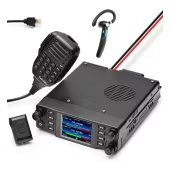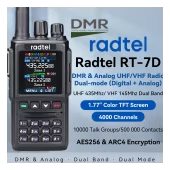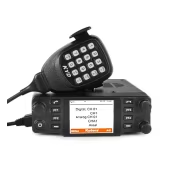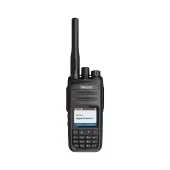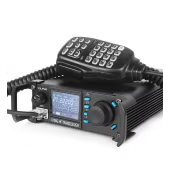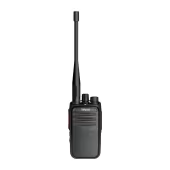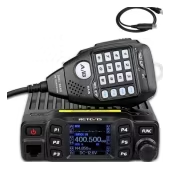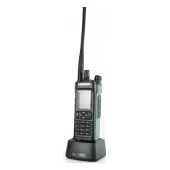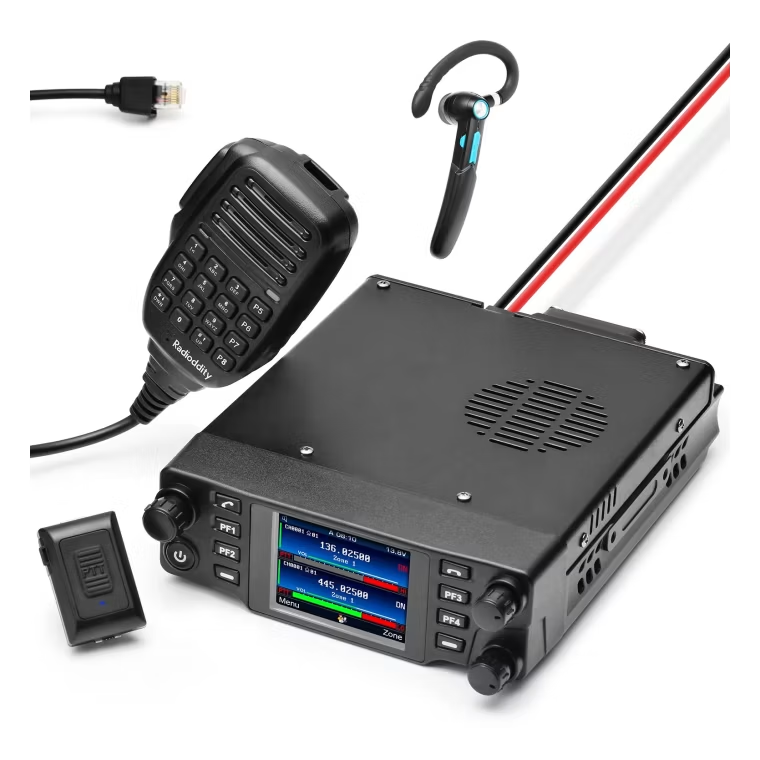
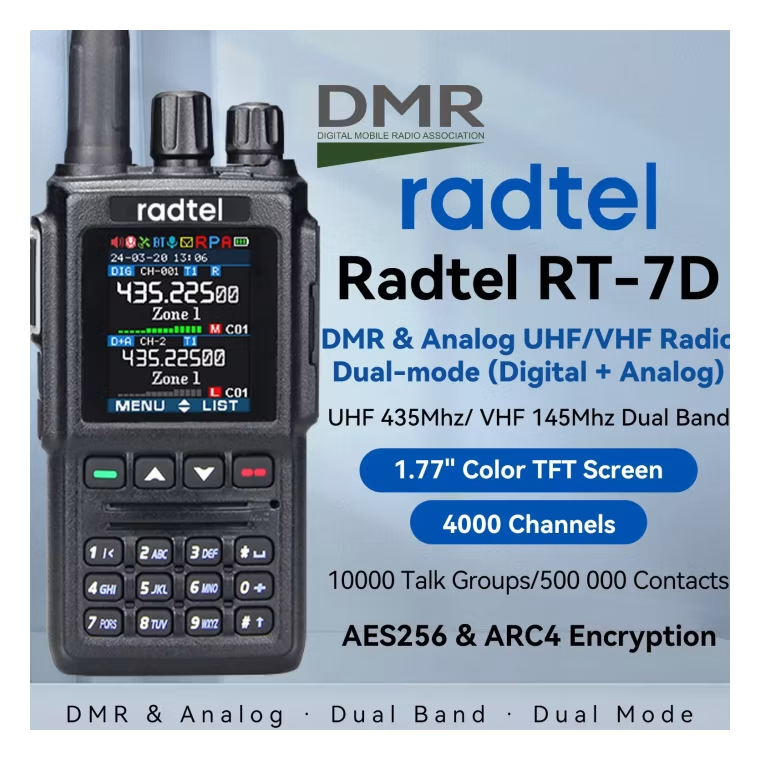
Why is DB40-D better than RT-7D?
- Transmit power40 W vs 5 W8×
Why is RT-7D better than DB40-D?
RT-7D has no measurable advantages in this pair.
Specifications
Side by side
| Radio & range | ||
| Radio standards | VHF, UHF, DMR | VHF, UHF, DMR |
| Licence | Amateur licence | Amateur licence |
| Digital mode (DMR / dPMR) | Yes | Yes |
| Dual band (VHF + UHF) | Yes | Yes |
| Frequency ranges | 136–174 MHz, 400–480 MHz | 144–146 MHz, 430–440 MHz, 144–148 MHz, 420–450 MHz |
| Transmit power | 40 W | 5 W |
| Channels | 4,000 | 4,000 |
| CTCSS / DCS sub-tones | Yes | Yes |
| Power & battery | ||
| Battery capacity | — | 1,800 mAh |
| USB-C charging | Yes | Yes |
| Design & durability | ||
| Weight | 907 g | — |
| Width | 137 mm | — |
| Height | 160 mm | — |
| Depth | 41 mm | — |
| Display | Colour display | Colour display |
| Features | ||
| VOX (hands-free) | Yes | Yes |
| Channel scan | Yes | — |
| Dual watch | Yes | Yes |
| Emergency / SOS alarm | Yes | Yes |
| FM radio | — | Yes |
| Voice encryption / scrambler | — | Yes |
| GPS | Yes | — |
| PC programmable | Yes | Yes |
| Connectivity | ||
| Bluetooth | Yes | — |